

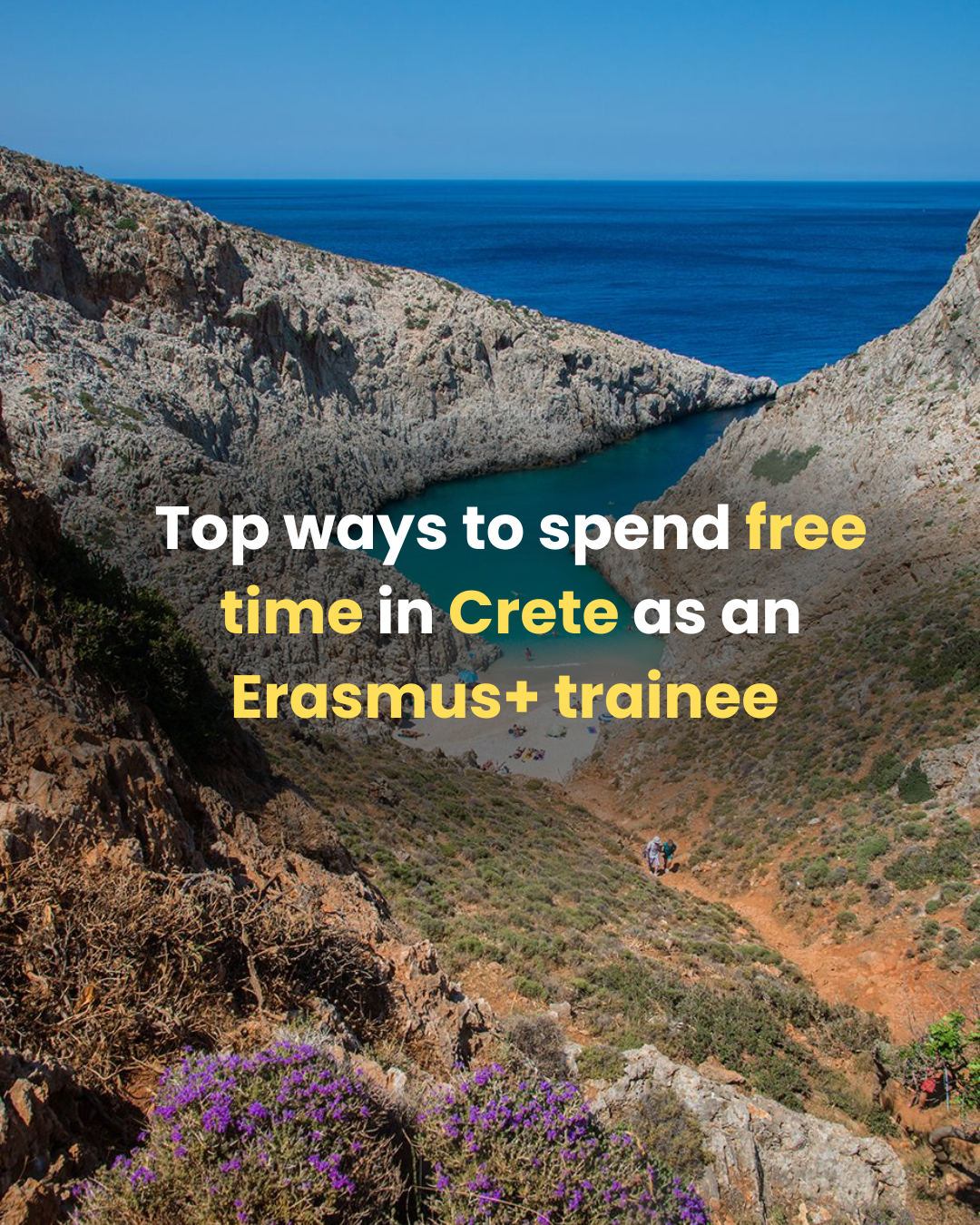
Landing an Erasmus+ internship in Crete means spending your season on an island that feels like an entire continent. From rugged canyons and pink-sand lagoons to thousands of years of mythical history, your days off are a blank canvas for epic road trips and unforgettable weekend adventures.
To help you maximize your downtime, we’ve mapped out the ultimate day-off itineraries to help you experience the very best of Crete without breaking your student budget.
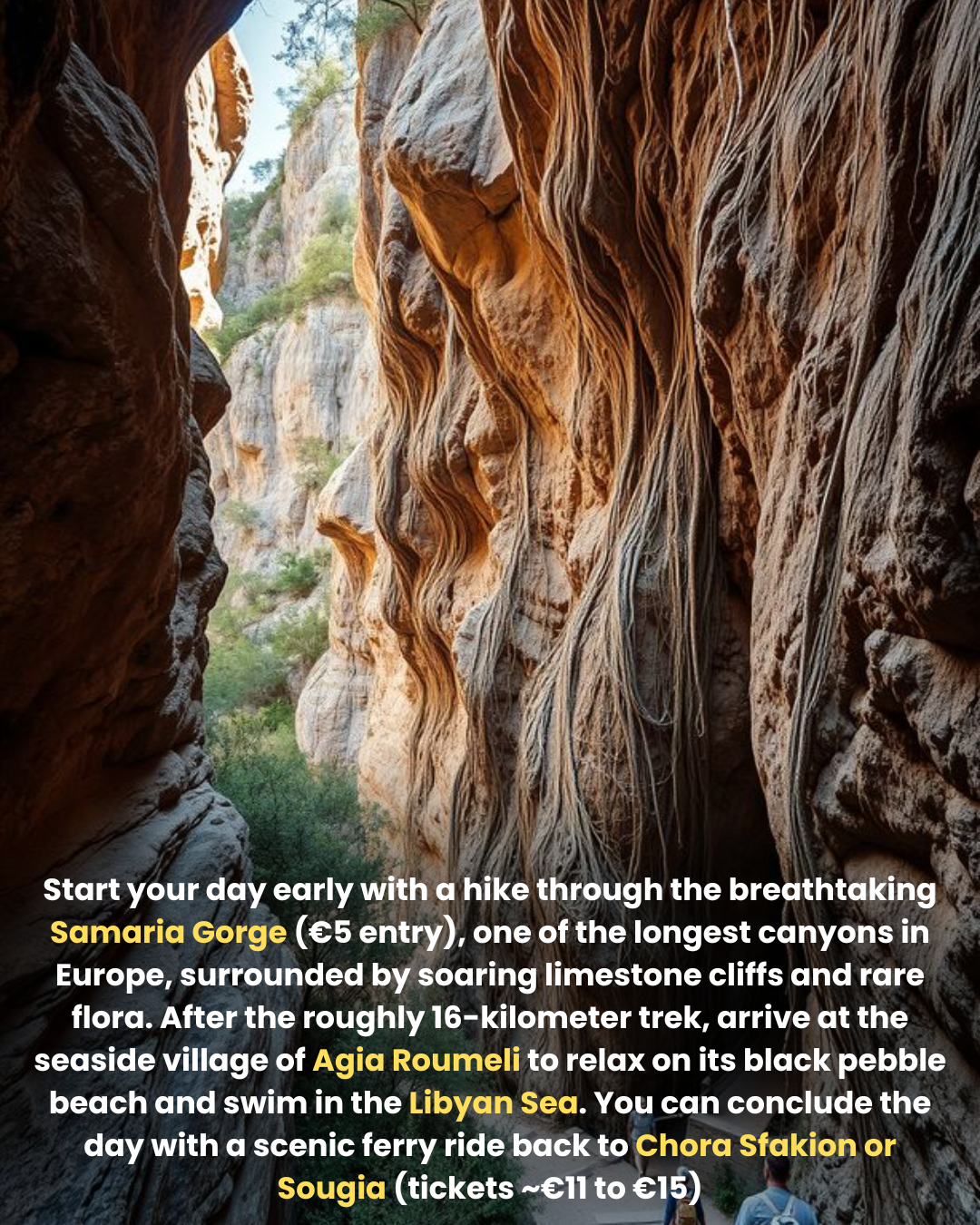
If you want to push your physical limits and witness the raw power of Cretan nature, a day-trip hiking the legendary Samaria Gorge is a mandatory rite of passage for every trainee.
As one of Europe’s longest canyons, the trail leads you through sweeping limestone cliffs and rare Mediterranean flora down toward the hidden southern coast. It’s a demanding 16-kilometer trek, but the final reward makes every step worth it.
The Reward: The trail opens up directly into the seaside village of Agia Roumeli, where you can kick off your hiking boots to relax on the black pebble beach and cool down with a well-deserved swim in the pristine Libyan Sea.
Logistics & Cost: The entry fee to the national park is incredibly student-friendly at just €5. Conclude your day out with a scenic evening ferry ride back to Chora Sfakion or Sougia (tickets run between €11 and €15).
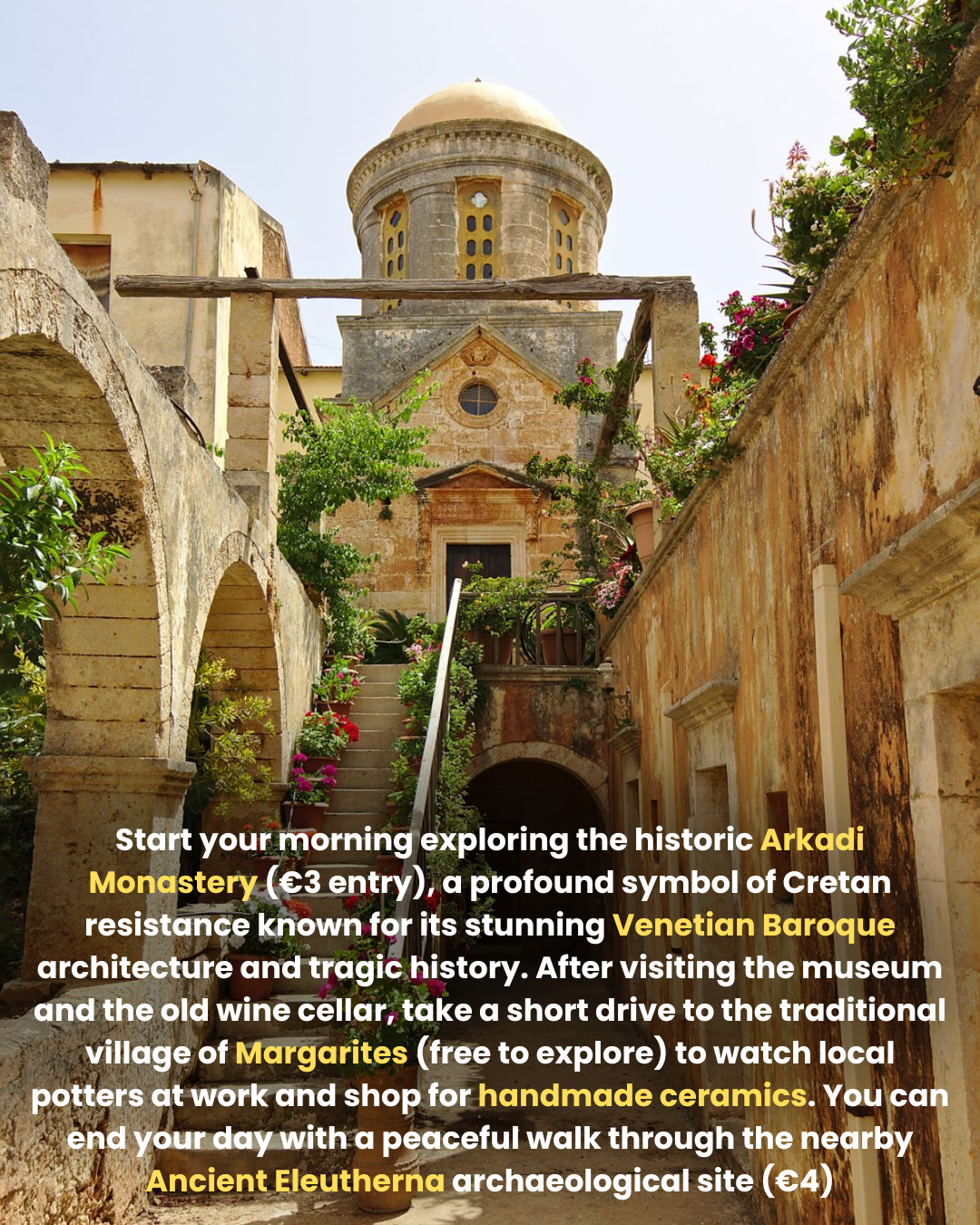
For a day packed with rich regional history and local island traditions, head to the rolling hills of the Rethymno region. Start your morning exploring the historic Arkadi Monastery, a profound symbol of Cretan resistance. Noted for its beautiful Venetian Baroque architecture and deeply tragic history, the site features a compelling museum and an ancient wine cellar that takes you right back to the 16th century.
Village Life: From Arkadi, take a short, scenic drive to the traditional village of Margarites. Entirely free to explore, this village is famous for its generational pottery workshops. Spend your afternoon watching local craftsmen handle raw clay and pick up some affordable, authentic handmade ceramics.
Ancients Trails: Wrap up your cultural itinerary with a peaceful walk through the nearby Ancient Eleutherna archaeological site, an open-air historical landscape open to visitors for a €4 entry fee.
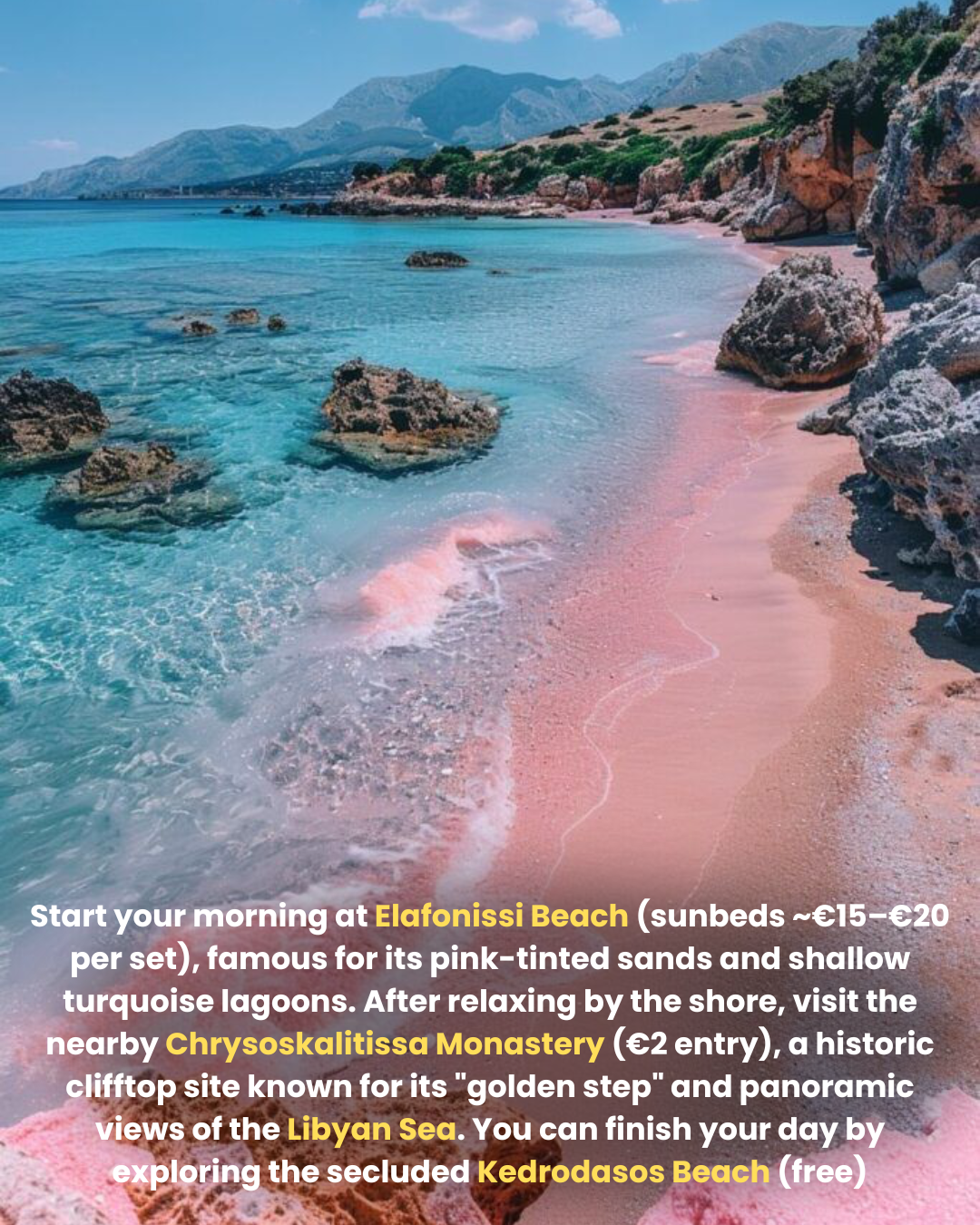
Begin your morning early at Elafonissi beach, internationally famous for its natural pink-tinted sands and shallow, turquoise lagoons. It feels more like the Maldives than Europe, providing the perfect backdrop for a few textbook island photos.
The Hidden Gem: When the midday crowds arrive at Elafonissi, escape to the nearby Kedrodasos Beach. Entirely free to enter, this secluded coastal oasis is shaded by a rare juniper forest and offers wild, untouched shores away from the main resort crowds.
Panoramic Views: On your way between the beaches, make a quick cultural stop at the historic Chrysoskalitissa Monastery. Perched on a dramatic clifftop overlooking the Libyan Sea, this €2 stop is famous for its legendary "golden step" and panoramic coastal viewpoints.
Budget Tip: While entering the beaches is free, renting a set of sunbeds can cost around €15 to €20. Pack a towel, some sunscreen, and an umbrella to keep things completely budget-friendly!
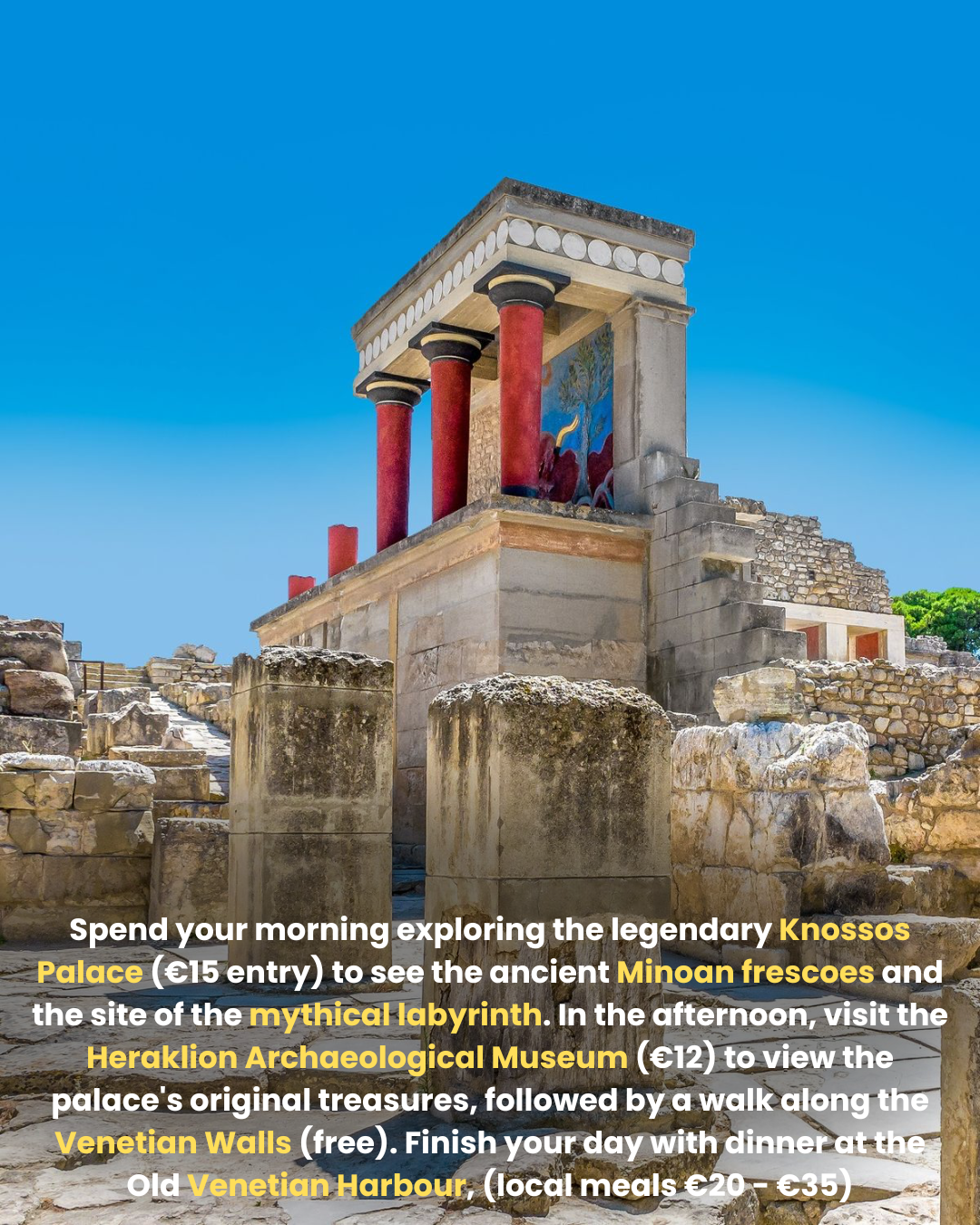
Treasures & Architecture: In the afternoon, head into the capital city to visit the Heraklion Archaeological Museum (€12 entry), which houses the palace's original, world-famous treasures and artifacts. Follow your museum visit with a breezy, sunset walk along the historic Venetian Walls.
Harborside Dining: Finish your urban exploration with dinner at the Old Venetian Harbour, where you can watch the fishing boats over authentic local Cretan dishes (expect €20 to €35 for an excellent local meal).
Crete isn't just a place to complete your work placement—it’s an island meant to be lived, explored, and discovered. Gathering your fellow trainees, splitting the cost of a weekend car rental, and setting off to explore these dramatic corners is where some of your best lifelong Erasmus+ memories will be made.