

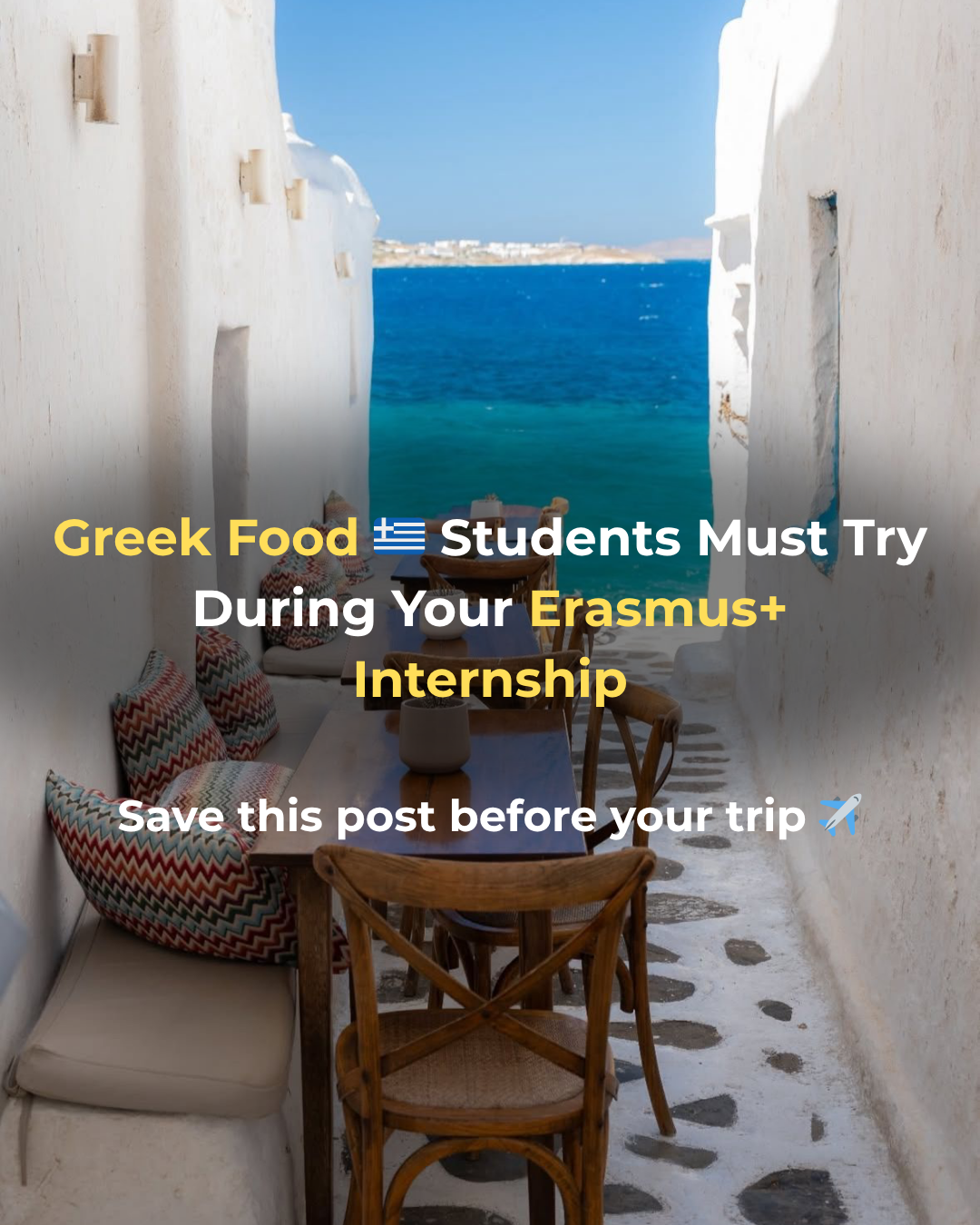
One of the absolute best parts of doing an Erasmus+ internship in Greece is the food. The Greek culinary scene is a vibrant celebration of fresh, Mediterranean ingredients, rich olive oils, fragrant herbs, and recipes passed down through generations. Eating here isn't just about fuel; it's a social ritual meant to be shared slowly with friends after a rewarding shift.
To help you navigate the local taverna menus like a pro, we’ve put together the ultimate checklist of traditional dishes you need to try before your season ends!
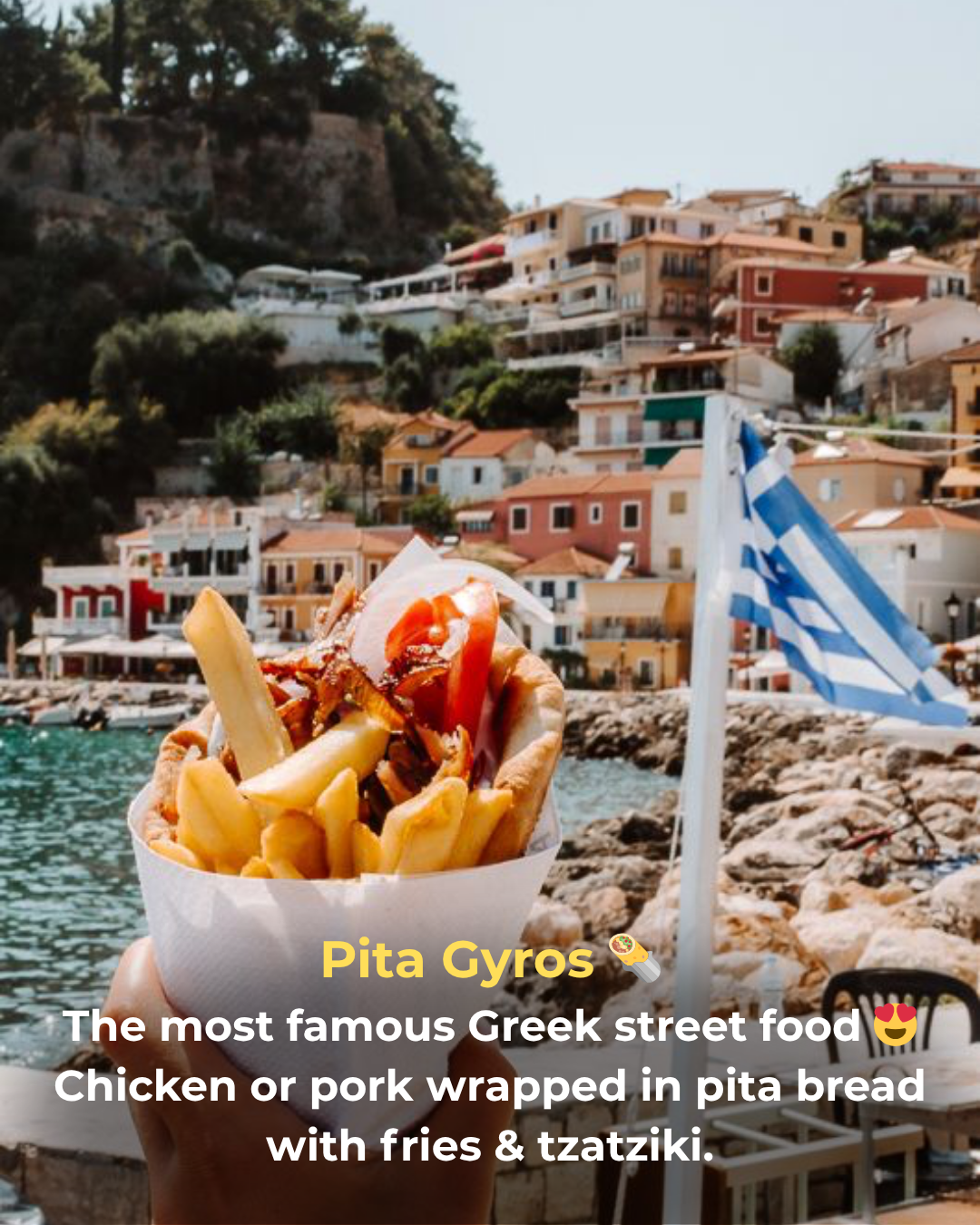
If you are looking for the king of Greek street food—fast, incredibly delicious, and deeply student-friendly for your budget—this is it. You will find a Souvlatzidiko (gyros shop) on almost every corner, and it quickly becomes the go-to meal after a high-energy shift.
The Magic: Slices of seasoned meat (typically pork or chicken) are slow-cooked on a vertical, rotating rotisserie until perfectly tender and crisp.
The Wrap: The meat is shaved fresh and wrapped inside a warm, fluffy, oiled pita bread. It is then packed tight with ripe tomatoes, crisp red onions, a generous handful of hot french fries (yes, right inside the wrap!), and a thick dollop of garlic-infused tzatziki
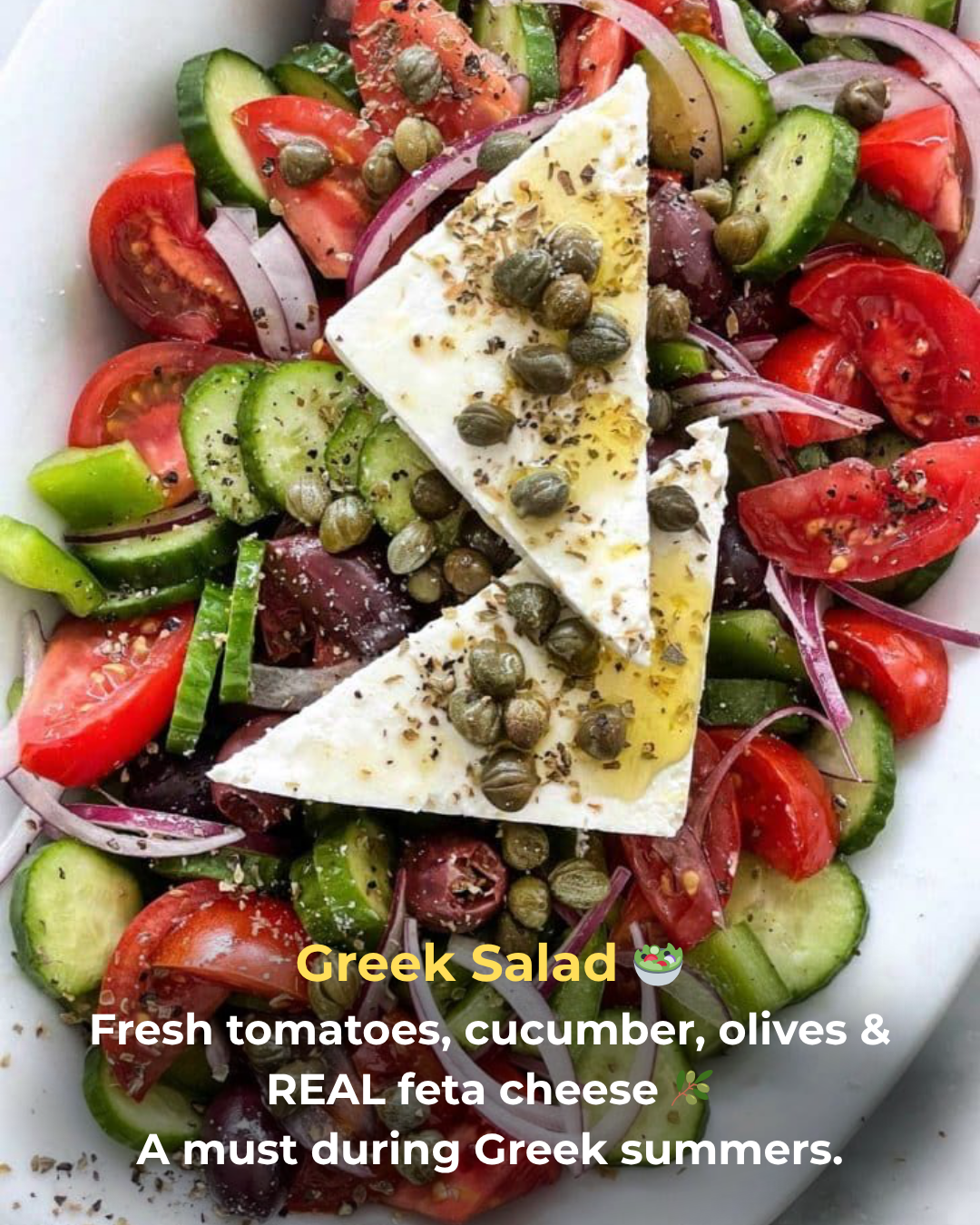
Locally known as Choriatiki (which translates to "village salad"), this dish is a masterclass in how simple, high-quality ingredients can create something extraordinary. It is wonderfully refreshing during the scorching summer months.
No Lettuce Allowed: True Greek salad features large chunks of juicy, sun-sweetened tomatoes, crisp cucumbers, sliced red onions, and briny Kalamata olives.
The Finish: Instead of being tossed in heavy dressing, it is crowned with a solid, thick block of rich feta cheese, generously drizzled with premium extra-virgin olive oil, and dusted with wild, dried oregano.
Pro Tip: Grab a piece of fresh, crusty bread and dip it straight into the leftover olive oil and tomato juices at the bottom of the bowl. Locals call this papara, and it’s the best part of the meal!
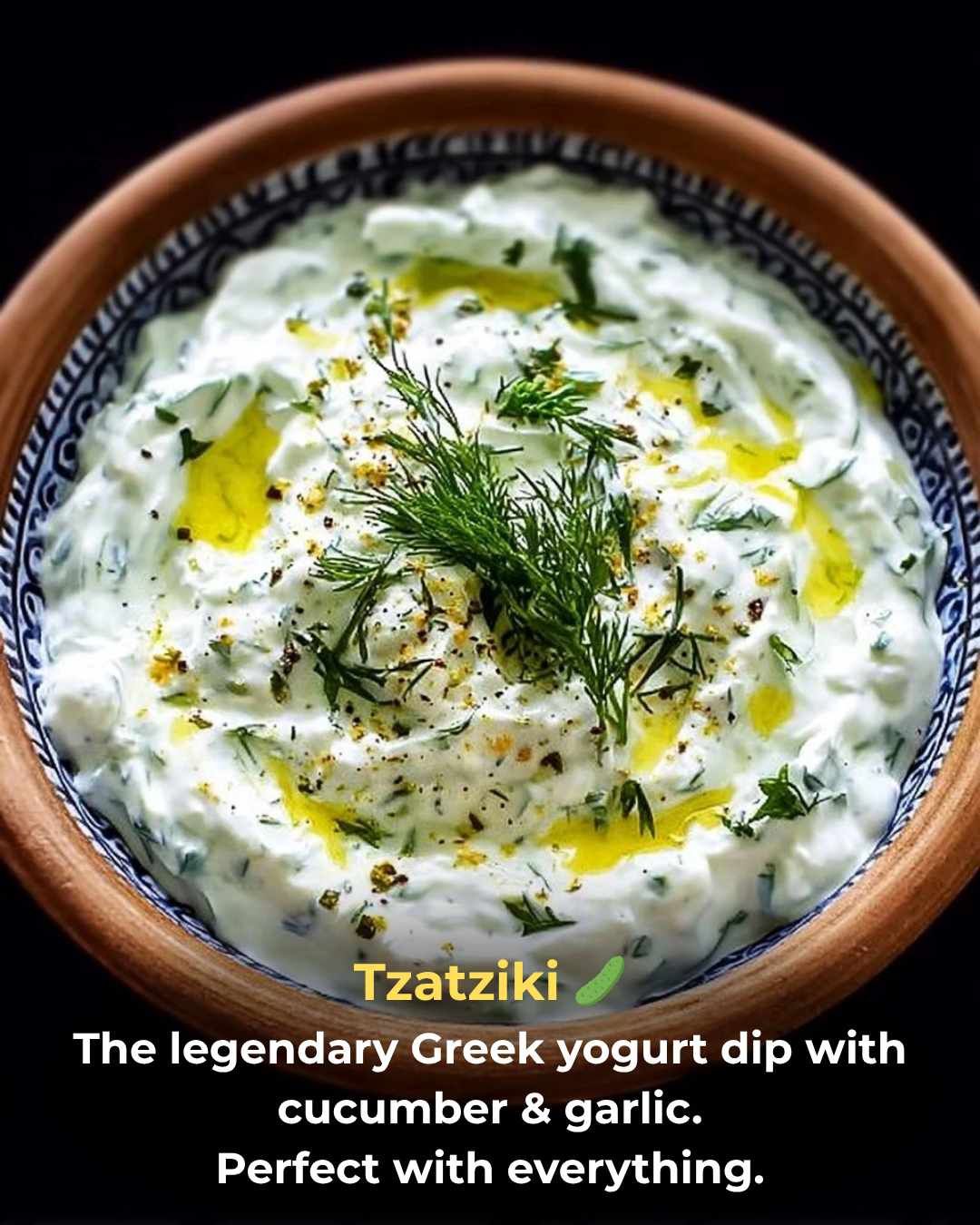
You cannot have a Greek meal without tzatziki on the table. This cool, creamy dip accompanies almost everything—from souvlaki and grilled meats to fresh pita bread and fried zucchini.
The Freshness: It is made from thick, strained Greek yogurt blended with grated cucumber (with the water squeezed out for maximum creaminess), plenty of minced garlic, a splash of olive oil, and a touch of fresh dill or lemon juice. It is punchy, refreshing, and entirely addictive.
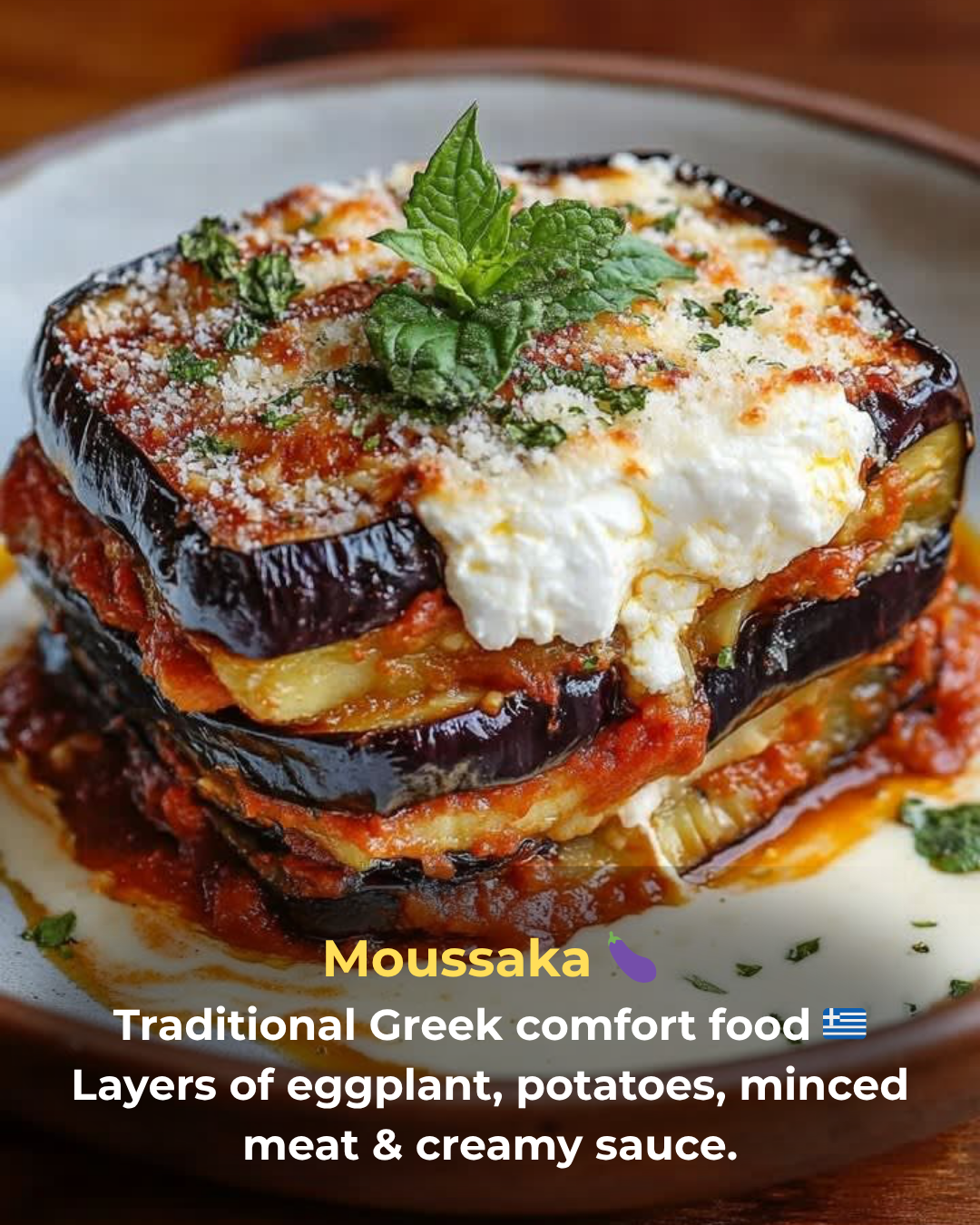
Often called the ultimate comfort food, Moussaka is a rich, baked casserole that tastes like a warm hug. It is carefully built in distinct layers and served in hearty squares.
The Layers: The foundation is made of tender, sliced potatoes and pan-seared eggplants. This is topped with a deeply savory minced meat sauce simmered with sweet tomatoes, onions, garlic, and a subtle hint of warm spices like cinnamon and allspice.
The Blanket: The entire dish is smothered in a thick,
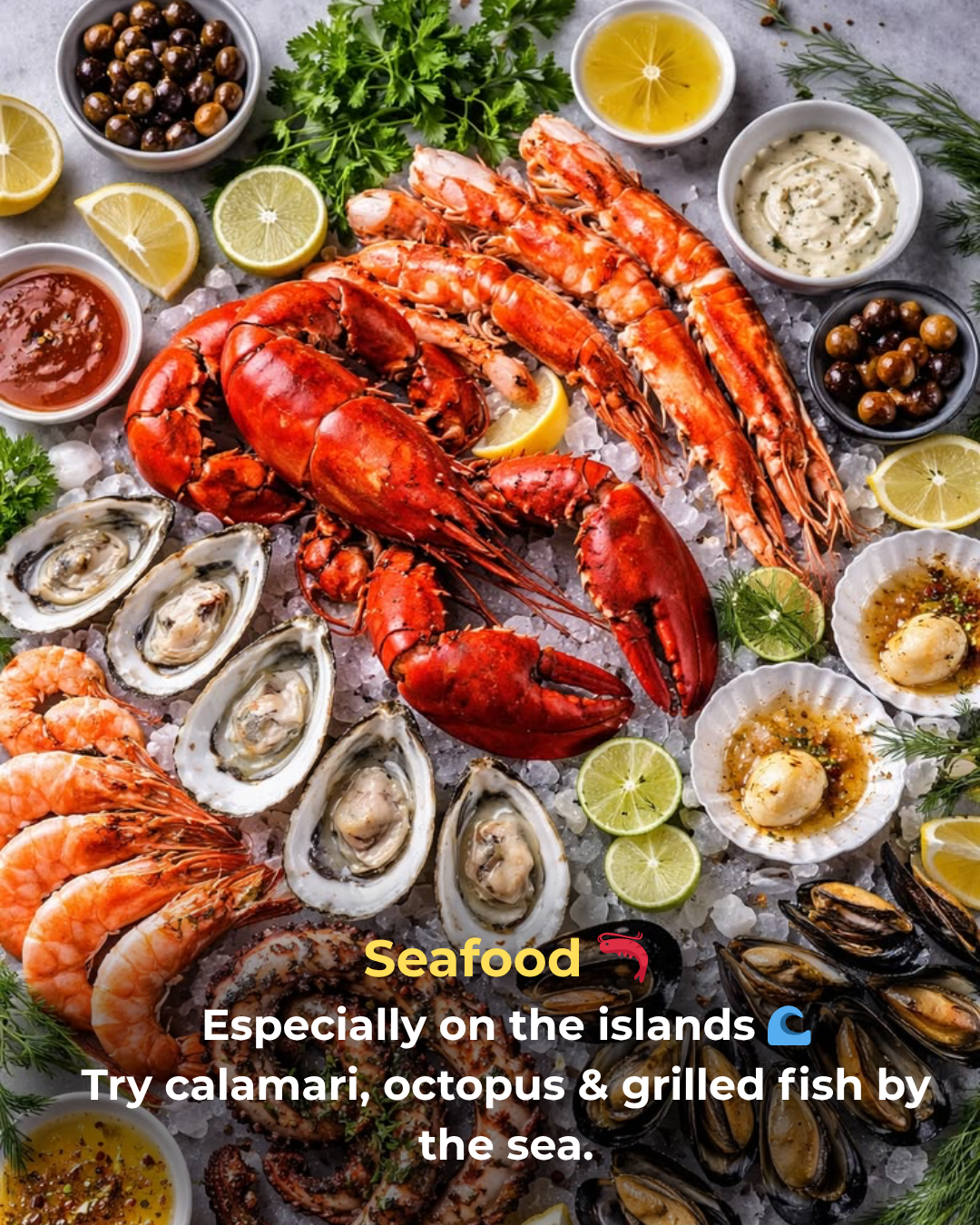
Living and working on a Greek island or coastal resort gives you front-row access to some of the freshest seafood in the world. A weekend visit to a seaside fish taverna (psarotaverna) with your international friends is a mandatory trainee experience.
From Sea to Table: Look out for local favorites like crispy fried calamari served with a squeeze of fresh lemon, grilled sea bream, and the ultimate icon: grilled octopus. You will often see the octopus hanging on lines outside the tavernas to dry under the sun before it is charred over open coals and dressed simply with olive oil and oregano.
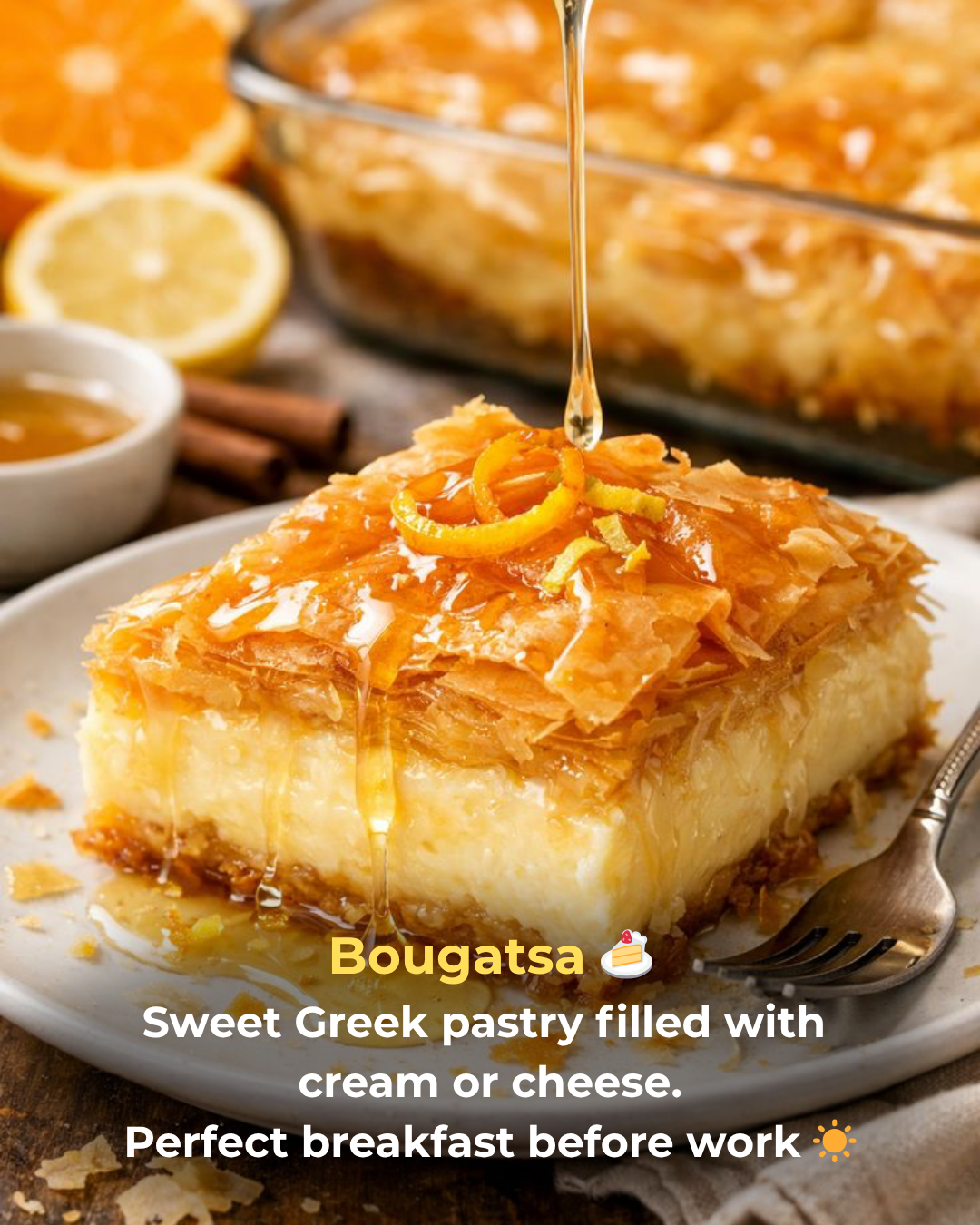
Time for dessert! Originating in Northern Greece but loved across the entire country, Bougatsa is a traditional pastry that makes for the perfect morning treat alongside a cold coffee.
The Crunch: It is made of multiple layers of paper-thin phyllo pastry that are folded over a rich, smooth center of sweet semolina custard.
The Sweet Touch: It is baked until exceptionally crispy, cut into bite-sized squares right in front of you, and served piping hot with a heavy dusting of powdered sugar and fragrant cinnamon.
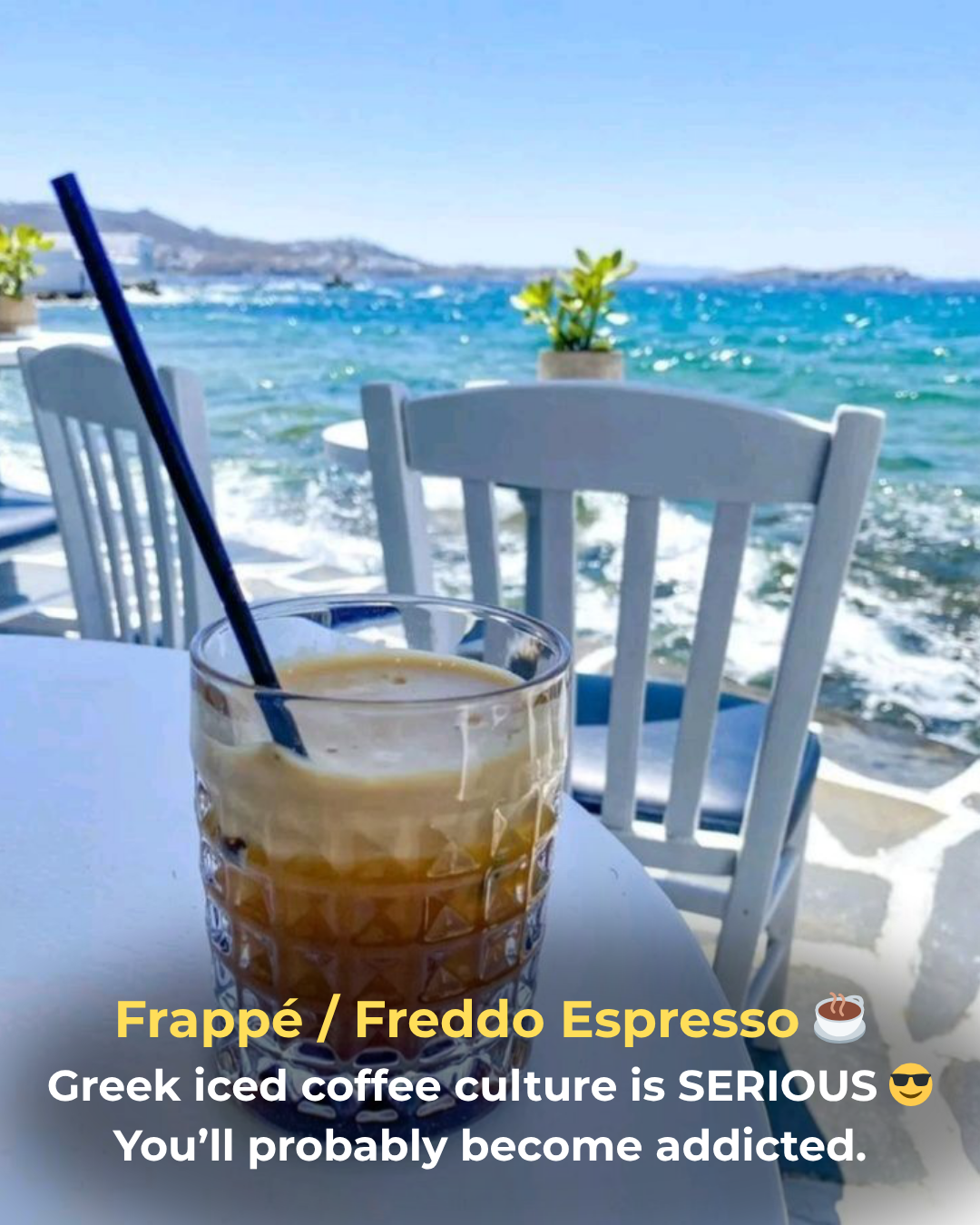
In Greece, coffee is not a quick shot of energy, it’s an art form and a multi-hour social event.
The Classic Frappé: Invented by accident in Greece in the 1950s, this legendary drink is made by shaking instant coffee, cold water, and sugar until it forms a thick, long-lasting foam layer over ice.
The Modern King (Freddo Espresso): The contemporary favorite among younger generations.
Food in Greece is an expression of hospitality (filoxenia). Ordering a table full of different plates, sharing everything family-style, and sitting by the water for hours is the fastest way to feel right at home during your placement.
Which of these classic Greek flavors are you trying on your next day off? Grab your roommate, head to the nearest local taverna, and let the feast begin!